Looking Fit

What does a fit person look like?

You. A fit person looks like you. Because what you look like and what you can do are two separate things.

Consider a friend, perhaps one who is the same age as you—what’s something you can both do? Maybe together you’ve run a local race, or moved one of you into a new apartment, or snowshoed to a backcountry cabin. We’ve established that you’re both fit to do this. But do you look the same?

You can look different than the person next to you and yet be fit for the same activities. There’s more than one form possible for each function.

What I looked like at 20 is different from how I look at 40 and will be different from how I’ll look at 60 or 80. In all cases, my body was/is/will be able (I hope) to go for a hike, push furniture around, and lift the Thanksgiving turkey-for-twelve out of the oven. Four different looks, but capable of the same functions.

Now, not only is there more than one form possible that is fit for a function, there are also many functions—activities, sports, general life requirements. (And thank goodness for that, because it’s what makes life interesting.) Think of all the things you’re capable of doing, right now, in the body you inhabit. Maybe you take care of other people, or cart around pea gravel, or travel, or play hockey, or you are growing a human—while also doing all the other things!

If you’re doing it, you’re fit for it, which means a fit person looks like you.

Of course, it may be that you look different from your friend and you are each capable of different things. That’s good news. A diversified skill set is what will carry your team through to the next round. You need those people, and they need you.

We are fit for many things, and we look only like ourselves.

First published July 31, 2019, Instagram (@shanajstone) and Facebook.
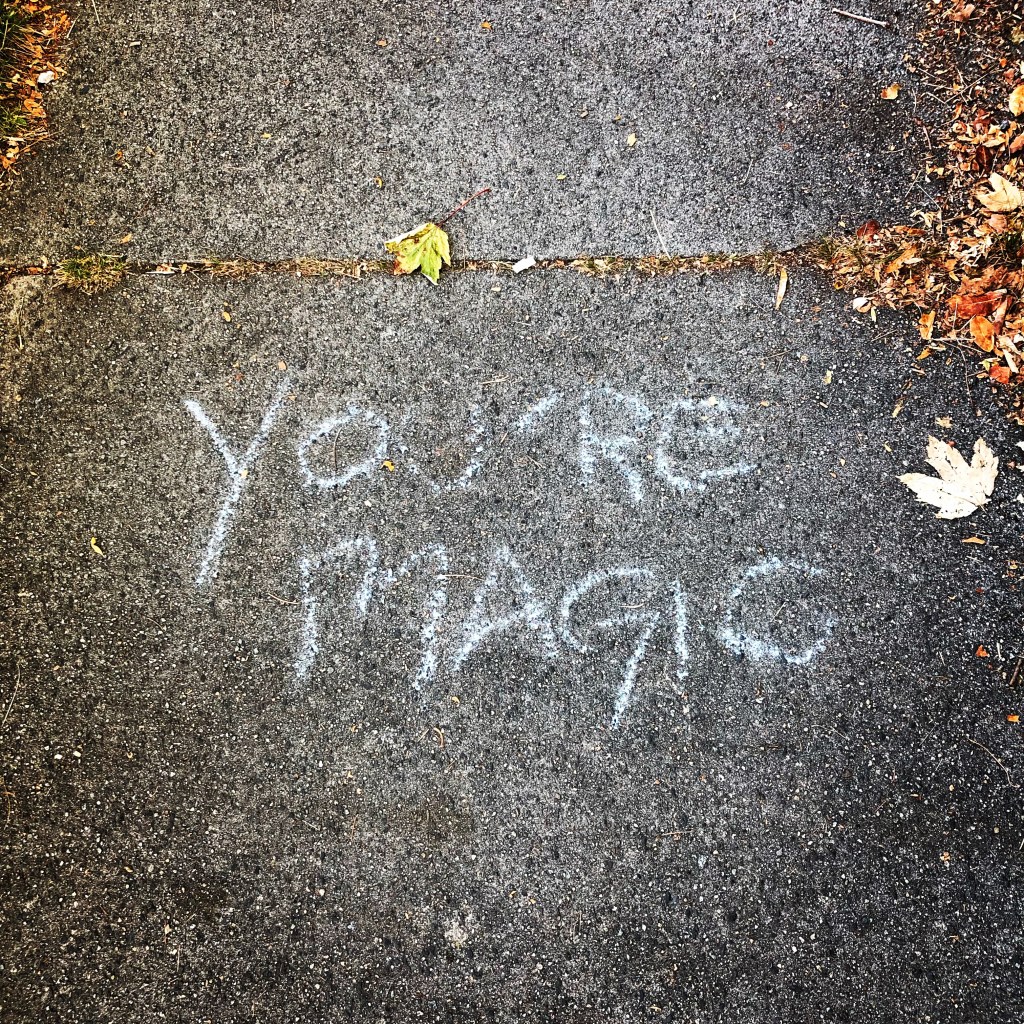
Your Now Body

Before and after are realms for the mind. For the body, there is only now.

You don’t exist in the before. Yes, you were alive yesterday, and fifteen years ago, and every day from the day you were born, all of which are part of the past. But each of those moments had its own now, and your bodily experience of those moments happened as now moments. The mind can return to them in memory, but your body cannot. Your body is physically anchored here, today, now.

You also don’t exist in the after. How can you? It hasn’t happened yet. You might be striving for something, working towards a future state of physical being or competence, sure. It will be exciting to get there. But though your mind can imagine it and plan for it, execution happens in the now. Here today, you can’t do tomorrow’s training or next week’s recovery. Your mind can plot ahead, but your body remains here. Now.

Perhaps you have a moment in time that your mind holds close, a time when you thought/think your body was/will be optimal in some way. This time could be a few years ago, or in your future. You may think of this as your used-to-be body or your after-body. It may represent what you perceive to be a source of happiness.

I get it—this image of your body that your mind has latched onto may have been/may be the result of a lot of hard work (or youth, or genetics, or circumstance). But the problem with a used-to-be body or an after-body that you’ve put on a pedestal is any day that comes after that fixed moment. The problem is the near certainty of change, which is the hallmark of passing time.

When we hold on tight to a particular image of ourselves, one from our past, we create a hostile environment for our current body. In this environment, who we are now is no longer enough. And when we idolize a particular self-image that hasn’t yet come into being, anything short of that image—in other words, who we are now—isn’t yet worthy.

Since it’s not possible to live physically in the past or the future, the present moment is everything we have. We are always in it. Your body, even as it changes over time, will always be your now body.

So what would happen if we chose to appreciate our bodies today? If you see your body as a source of happiness, whether from how it looks or how it functions, appreciating your body now opens a path to that feeling that you can access every damn day.

Your now body is right here, right now, waiting for you.

First published July 24, 2019, Instagram (@shanajstone) and Facebook.

Fitness Is Not a Competition: That Feeling

It’s okay if you see something that someone else has and want it for you, too.

Maybe you see a stranger climb a local pitch, or your friend completes a Gran Fondo with style, or someone at your gym has a two-pull rope climb.

You might feel…jealousy. It might be hard to admit, but there it is. It’s no surprise, really. We’re taught to compare ourselves to others. We expect to compete for limited resources. We learn that there are winners at the expense of losers and that the rewards go those at the top. But with fitness there is no competition. You can have it too.

Here’s the important bit: Your response to others’ achievements paves the way for your own. If you celebrate the success of others, you’re saying yes to that success for yourself, too, whether it be now or in the future. None of us exists in a vacuum. Your support of others matters—to them, to a future you, and to everyone else who wants to succeed. It creates an environment where we all can strive and where more is possible.

Likewise, if you put down the success of others, you’re saying that you’re not interested in that achievement for yourself. You are, in effect, saying that the achievement has no value—not for you or anyone else. This creates an environment of apathy.

If, by watching your peers increase their fitness, you discover a sharp desire to handstand, increase your bench, or row a lightning-fast 2k, channel that motivation into your training. Now you have a goal and the drive to make it happen. Go get it! Your achievement won’t supplant someone else’s. But do this first: Cheer on the person who is inspiring you.

First published June 5, 2019, Instagram (@shanajstone) and Facebook.

Fitness Is Not a Competition: Abundance

Sport is competitive, as are many other things—a game of chess, a spelling bee, a job opening, an audition, the last seat on your bus-ride commute. What do all of these have in common? There is a winner and there are those who…didn’t win. The reward is limited to one, sometimes to a few. The system is based on scarcity.

For many of us, the competitive mindset is in our blood. We feel driven to lift heavier and move faster than those around us. We want that personal best. We want to “catch up” to our friends who can do more than we can. We want to regain a skill, a speed, a body we once had because we think we used to be a better version of ourselves.

We’re comparing a past or an imagined future to where we are now and judging our current selves lacking, less worthy than before or not yet enough.

Your fitness doesn’t exist in a system of scarcity. It is available to you now, or later, whenever you decide to strive for it and regardless of who else is working on theirs. There’s no podium and no limitation on who can have it, how much you can have, when you can have it, or how long you can have it for. There is no competition—it just doesn’t exist.

Moreover, you don’t live in the past or the future. You live in the now. So how are you not enough? You are, literally, everything.

In the land of fitness there is infinite room, space for all, enough for everyone.

First published May 28, 2019, Instagram (@shanajstone) and Facebook.

Fitness Is Not a Competition: It’s All About You

Your situation is unique. Really, it is. Hear me out.

Your physical fitness and the mindset you bring to it are specific to you and your personal history. What you can do with your body, right now, is a manifestation of that lived experience.

The variables are infinite. Blow out your knee ten years ago? Recovering from a major illness? Not sleeping well or working eighteen-hour days? Your mental and emotional stressors are just as significant and combine with the physical to create the you of this moment.

This is the you that is capable of what you can do right now.

Does it make sense to compare your work-, family-, or injury-related stress to someone else’s? No? Then why would you compare your one-rep max of anything?

How about this: If you and I were to compare our fitness in a contest of shoe-tying, would it matter who wins? If it doesn’t then tell me why it matters that you lift more than me or I run faster than you. Each of us can do what we can do and it’s irrelevant to compare.

But there is a place where our unique situations are indeed relevant to others. We all experience challenges, sometimes small and niggling, sometimes devastating. And we all experience successes, be they fast and fleeting or sticky and triumphant. Though incomparable, our experiences are what allow us to relate to each other. Comparison is pointless, but empathy is gold.

First published May 22, 2019, Instagram (@shanajstone) and Facebook.

Fitness Is Not a Competition: Fit for What?

Can you identify the exact criteria for fitness? Few can agree on what to measure, never mind the thresholds required, so don’t be surprised if you find it difficult to pin down. Part of the issue is identifying the fitness objective—what is it being used for?

My fitness objectives are likely different from yours, and yours are likely different from your neighbour’s. For example, I’m currently fit to care for myself, do basic maintenance around my home, carry my groceries, walk around town or hike through the forest, go ocean paddleboarding, and learn new gymnastic skills. In other words, my fitness matches my objectives. I have other objectives that I’m also working towards, and my fitness is moving in that direction. Should my objectives change, I would likely work to alter my fitness accordingly.

But I’m a competitive athlete, you say. Well, do you want to run hurdles, or long-distance cycle, or execute a tumbling routine, or fence, or play rugby? Great! Are the fitness requirements the same for each sport? Are you working on fitness specific to your objectives?

There’s no bar for fitness, nor should there be. Fitness is not an absolute. There is only the ability to do the thing you want to do, at the level you want to do it at.

When you picture yourself as a fit person, what activities are you doing? If you’re already doing those activities, mission accomplished. If you’re on the path to making it happen, mission accomplished also. Everything—everything—is a progression.

First published May 14, 2019, Instagram (@shanajstone) and Facebook.

Fitness Is Not a Competition: An Introduction

A competition is a contest in which there are winners and losers. At its core, competition is a comparative exercise. Someone comes out on top.

Sport is competition. Fitness is not.

Let’s look closer.

In sport, we determine a winner or a ranking of the top few. Someone is identified, as objectively as possible, as the fastest, the strongest, or the most skilled. Validation comes from others; it is external to the self. The point is to win.

The pursuit of sport and the pursuit of fitness are fundamentally different. In fitness, there is no finish line, no award ceremony, and no gold star. Validation is found internally, from meeting your own needs. The point of fitness is to be able to participate.

This doesn’t mean that fitness is easy. In fact, it’s often harder than sport. Without the clear parameters of winning, how do we know when we achieve it? Without agreed-upon rules of engagement, how do we know we’re doing it right? And perhaps most confusing, without competition, what drives us?

In this series, we’ll explore fitness from a mindset perspective, because so much about the body is really about the mind.

First published May 7, 2019, Instagram (@shanajstone) and Facebook.