Exploring the Edges of Capacity

One potential framing of the situation is to think that my body is falling apart. Or to think that I’m prone to injury. It’s easy to blame age, or look for pathology, or wonder What’s wrong with me? But I really don’t like this way of looking at it. I don’t think it’s useful.

What’s going on? I’m having pain in new areas of my body. Each new experience feels relatively sudden and unprovoked.

But it’s not quite that simple. In truth, I’ve been trying new movements and asking more from tissues unaccustomed to providing. And I’m continuing to push in now-familiar movements, asking even more from tissues that, though accustomed, surely have a limit to their current capacity.

What’s another way of thinking about the situation that will do some good? I’m choosing to frame the experience as exploring the edges of my capacity.

The thing about edges is that it can be unclear where they are. Sometimes you have the idea they are lurking just ahead. Other times they catch you completely unaware. It often takes going past an edge to know where it is, and then, of course, you wish you could back up. But you learned by doing this. You learned where the edge was, what it took to cross it, and what you could do differently to perhaps stay away from the edge. You know your limits now.

This sounds like a way to avoid future injury and all that comes with it, like the pain, frustration, inconvenience, and emotional strain. The idea of staying far away from the edge is appealing. It’s an approach I could take without shame—because who wants to hurt themselves? But it also puts a limit on what I can achieve, and I’m not interested in limiting myself.

What if, by exploring the edges of capacity, we learn to see an edge as simply the thing that currently hinders our ability to make progress toward our goal? What if we treat it as something innocuous and likely temporary? It’s a nuisance, certainly, but not something that defines us. It’s not This is what forty-five looks like or I’ll never be able to do this. It’s just (another) challenge that requires patience and work.

And, at risk of rolling my eyes at this later, I might even call this exposure of weakness an opportunity.

Before encountering the edge, we don’t know where our limitations are. If you’re doing what you want to do and don’t encounter your limits, they may be irrelevant for you. After all, it’s only when they stop us from doing what we want to do that we consider them limiters. But if you’ve discovered a weakness and you haven’t reached your goal yet, you can work on it—to create more capacity, more space between your active self and the edge.

Am I injured? I think so, yes. But I get to choose how I think about it. I’m not falling apart, and I’m not particularly injury prone. What I am is an athlete who wants more from my body. I’m generally working within my capacity while also trying to increase it, and because I’m pushing against the edges on a regular basis I occasionally step too far.

It’s okay. I’m exploring the edges. I know where some of them are now.

SLOW PRACTICE

Handstand. I’m new to it—earnestly, painfully new—but I’ve had the handstand on my mind for a few years. Though I was building strength during that time, I wasn’t actively working on handstand skills or foundations. That changed a couple of months ago, and I can now say—with a self-congratulatory air—that “I’m working on my handstand.”

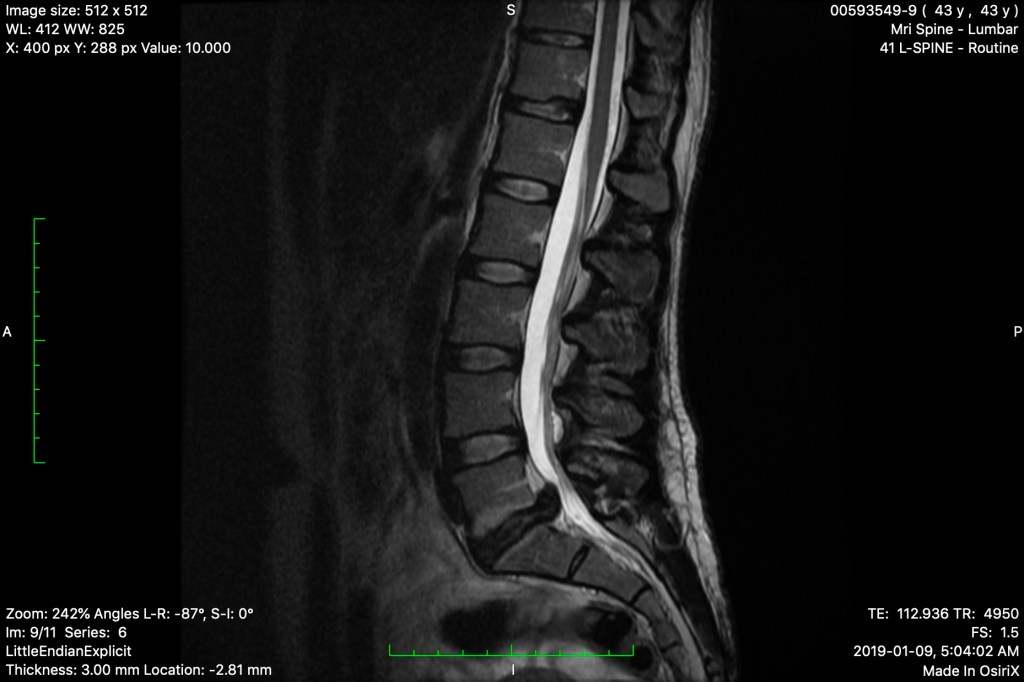
What changed so that I deliberately started training the handstand? The promise of the handstand for me, right now, is a goal-oriented challenge with an acceptable amount of risk. I’m recovering, slowly, from repeat back injuries, and my spine doesn’t like to be loaded or in too much flexion. These injuries take a long time to heal, and having had this experience I’ve decided to pursue fitness and physical skills in ways that are less likely to set me back for years at a time should I be injured in the course of practice. 

Certainly there are activities less likely than hand-balancing to contribute to injury, but I can mitigate the risk with slow practice. The handstand offers me the opportunity for disciplined training and the reward of consistent, incremental progress. It also allows me to focus on the foundational requirements without throwing my body into a position before it is ready. I can slowly expose my spine to more flexion, my wrists to more extension, my shoulders to more load in a deliberate, calculated way, and I can turn the dial down—go even slower—to reduce exposure if need be.

So far, I’ve had success with a weekly foundational practice. I’ve been working on wrist and shoulder mobility, holding a stacked body position, and getting comfortable with my weight on my hands and my hips above my head. All of which is doable with my healing back. I’m getting a taste of what it will feel like to be fully upside down and balancing, and I can see that the skill I really need to master is patience. Like healing from injury, learning the handstand will take time. 

I’ve been working through a training program at my own pace, which is significantly slower than scheduled. I’m ignoring the recommended weekly advancement in favour of listening to my body as I decide whether to try the next progression, hold a position for longer, or do more repetitions. I’m always excited to take the next step, but I’ve learned that it’s much more important to be ready for the next step, and that means tempering the excitement into a steady, sustainable interest that is more likely to allow for good decisions.

So I’m taking it slow, owning each progression, and grateful to have begun.

These Injurious Times

When the pandemic first made an impact here, in my life, in March 2020, the parallels between pandemic and injury experiences were quickly apparent. Everyday life changed and plans were put on hold. I had to adjust my expectations. I needed to assess risk often, under changing circumstances. I sought to know as much as possible to help me make good decisions. This has been my experience of life during COVID-19 for the last six months, and also my experience of injury.

Early in the pandemic and until very recently, the idea of writing about my injury felt inappropriate and self-absorbed. With so much going on in the world, affecting so many people so profoundly, my personal experience of injury seemed of little importance. It just didn’t feel right to write about it. But lately I’ve been thinking again about what it means to be resilient, this time during a pandemic, and I keep returning to lessons learned during injury. No matter what else is going on, I’m still in my body, still working through an injury, so I think it’s to be expected that my experience of injury will influence how I think about other things.

I’ve written before about working on physical resilience for its own sake as well as for bolstering mindset. Strengthening the body is useful (especially for an apocalypse, or a revolution), and taking action on this front gives the mind something positive to focus on. But mental resilience is surely about much more than giving the mind something to do, and if this pandemic has shown us anything about responding to adversity over an undetermined length of time, it may be that the mindset we carry with us is a significant factor in how we approach and experience hardship, the unknown, and change.

The Resilience Mindset

Resilience, as I’ve come to understand it, is largely about adaptation. To be resilient is to have the capacity to adapt to changing circumstances and thrive. Having a resilience mindset means being ready and willing to adapt as needed in new or challenging environments.

Human society chooses whether to adapt. Unlike other species with limited abilities to move, access food, fend off new predators, or shelter from heat and storm, humans get to decide if, when, and how we adapt (until it’s too late). Whether or not we humans, as a species, survive and thrive is largely up to us. We get to make the decisions that shape our fate.

Of course, we don’t instantly adapt just because we decide to do so. The work of adaptation can be difficult, unclear, and painful. Choosing to undertake this work requires courage and grit.

Applying a resilience mindset to injury or to pandemic times means figuring out how to adapt and doing the work to make it happen. It means setting new goals and adjusting expectations for daily life or long-term outcomes. It may require a new approach to something you learned how to do long ago, which itself requires flexibility and a willingness to try new things. It will likely require redefining what’s important to you, and your definition of success—in work, in relationships, in physical achievement, in life—will probably need to change. These are the adaptations you must choose to undertake in order to thrive, because the world/our body has changed and we cannot live in the past.

Choose to Adapt

The idea of “returning to normal” (that is still making the rounds this far into a worldwide pandemic) doesn’t sound like resilience to me. It sounds instead like determined ignorance: a refusal to acknowledge that the foundation or structure of our society/body has been cracked, deeply, by forces that require attention and redress. Normal is not—was never—an ideal state. Normal might be familiar, but it isn’t necessarily good for us.

Let’s not go back there. Let’s seek transformation and move forward instead.

There’s an idea in resilience planning, particularly in natural hazard and risk management, to “build back better.” This refers to recovery that offers a safer, more resilient place to inhabit following devastation. Though typically applied to buildings and infrastructure, the idea works just as well to conceptualize a just and fair society, or a strong spine. The intention, for whichever challenging situation we are seeking to recover from, is to create a new version that is better able to handle stressors, shocks, and forced change. To be resilient is to be able to withstand, recover, and continue on despite adversity, in whatever new form is optimal for the new condition we find ourselves living in. We do this by adapting.

Adaptation is resilience made manifest.

We each have an experience of injury that is valid and specific to us, and so it is with this pandemic: our experiences are not all the same. But most of us are finding that such challenges expose our weaknesses, and we must decide how to respond. Do we break or do we adapt? Do we settle for old ways of functioning or do we remodel ourselves to thrive?

I’m hoping both experiences lead us to a better future version of ourselves. I think they will, if we choose to adapt.

Curious and Sharp

I’m curious about how I’m going to handle this latest round of setback from injury. Curiosity is not my primary emotion, let me be very clear about that. But it’s the one I’m willing to talk about right now. 

I’m curious whether I’m going to feel more resilient or less when I come out the other side. I’m curious whether setbacks like this get easier to handle, the more often you experience them. I’m curious whether there are more lessons to learn from injury, ones I didn’t already pick up from my experiences so far.

Is curiosity an emotion? I’m not so sure that it is. But it seems like a fairly neutral state for my inner monologue to stew in. This situation is fresh enough that I don’t yet have perspective and haven’t learned anything new, so I haven’t yet embraced the silver linings. I’m in that cloud of feeling where just when I think I’m getting ahold of myself and calming down, someone asks how I’m doing…and I break down. This is how I know that I’m still in a reactive phase. This is how I know that I’m still in the feel-my-feelings stage of this latest incident. 

I don’t really understand what happened and I don’t know what the future holds, which makes curiosity a means through which I can poke and prod these two things without getting wrapped up in the fear. Not knowing is scary. Curiosity offers a small bit of distance and room for hope.

I’m curious if something I wrote a few days ago still feels as sharp today. Let’s look:

“I’m afraid. I’ve hurt my back again and all the remembered fear, frustration, pain, and panic is instantly here. I’m trying hard to not catastrophize the situation. Surely it’s not another disc herniation. But did I re-injure the tissue I’ve been working so hard to heal? Five months with no back pain and then this—I’m literally on the floor. What the fuck.”

It is less sharp by a hair. 

Getting Fitter, Later

A Consideration of Age, Time, and Experience in the Pursuit of Fitness

One of the characteristics associated with aging is the idea that we can no longer do what we used to be able to do, or that we are slower, weaker, less fit. But what about those of us who get fitter later—who, nearing or passing middle-age, are striving to be faster, stronger, and learn new skills? What does age mean for us as we train our fitness?

Levelling Up to Masters

If sport, recreation, or general fitness is important to you, and if you are, let’s say, 35 or over, you may identify as a masters athlete. The athlete identity doesn’t belong solely to the younger crowd, nor to those who compete, whether recreationally or professionally. It doesn’t require a particular level or type of fitness. What matters is how you see yourself.

Those of us who identify as athletes, unless we have dropped out of sport or fitness altogether after our youth, will spend most of our athletic lives in the masters cohort. Though it varies by sport, the masters level, which is defined by age, typically starts between ages 30 and 40. The idea is that those who reach this age are no longer competitive with younger athletes and require an age group restriction to level the playing field in competitive settings. The masters level is often further broken down into five-year groupings extending from the starting age, reinforcing the idea that once we hit a certain age threshold our decline in physical capability speeds up, preventing fair comparison between athletes more than five years apart.

Some sports see athletes peak at very young ages—think of gymnastics or figure skating where teenage athletes often reign. Other sports, like soccer, football, track, and skiing, favour the twenty-somethings. At the competitive level (in open categories not bracketed by age) in nearly all sports (except, perhaps, strength sports), the 30-year-old athlete is somewhat uncommon, and the 40-year-old athlete is a rarity.

It might be the case that, as science and society get better at understanding aging and supporting longevity, athletes will have longer competitive careers. Perhaps we’re starting to see evidence of this now, with 46-year-old Jen Thompson, 39-year-old Venus Williams, 38-year-old Shalane Flanagan, 37-year-old Serena Williams and Samantha Briggs, and many more masters-age athletes competing against their juniors in open categories.  

The thing about competitive athletes, though, is that they typically start their training young. They get fit early and stay fit for the duration of their athletic career. Their peak is the result of many years of hard work, and their decline in sport is the result of many coalescing factors, not the least of which is bodily wear and tear. 

Most of us aren’t competitive athletes, though, and not all of us were especially fit in our younger years. In fact, many of us are just getting started by the time we reach masters status. It may even be the case that levelling up to masters is what has enabled us to finally pursue fitness in the way we want to, whether that means identifying as an athlete or not. 

For us, the training is becoming more intense—not less—relative to what we’ve done before. We may be learning the basics of how to move with good form, how to fuel, or how to work with a coach. Or we may have the basics and are now working on building specific skills and developing a healthy mindset to help us achieve our goals. We’re in the midst of a learning curve.

This might sound daunting, or it might sound exciting. In either case, the great benefit of getting fitter later is that we can draw on our experience gained from other aspects of our lives.

Have you ever made a plan to achieve a goal and seen it all the way through? Have you experienced adversity and come out the other side? Have you applied a skill set learned in one area of your life to another, such as one learned in your personal relationships to your career, or one learned in school to your health? Have you thought about what’s important to you and what you want your future to look like? Yes? Then you have what you need to excel at the masters level.

Age = Time = Progression

Is “masters level” a euphemism for old? Or could it be a recognition of achievement?

Every day, every month, every year, I’m older. This is supposedly an unfortunate thing; we’re told that aging is undesirable. We’ve come to expect that to get older is to get weaker and slower. We’re pressured to prevent aging at all costs (as if that were possible).

But it’s not age, really, that’s so maligned. “Age” is just a shorthand for bodily wear and tear, past injuries, increased recovery time, and the accumulation of years of poor posture, stress, and exposure. Age isn’t actually any these things. Age is simply a marker of time.

If we were to recognize age as the passage of time, and time as the factor that allows for change to occur, could we not see aging as the opportunity to progress and achieve our goals?

It takes time to build muscle and cardiovascular fitness. No matter when I start, if I train for these objectives I will see progress in time—and I will, simultaneously, get older. This is true whether I start training at 15 or 55. Gains can be made in these areas at any age, and if you are new to it but train consistently, you can expect to get fitter as you age. Not because you are aging, exactly, but because it takes time to make progress.

It takes time to establish a habit, such as doing regular training sessions. How long? Some say 21 days. Others, 66 days. In my experience, habits of all types tend to take longer than this, especially if the new habit is challenging. Of course, so much depends on the individual and their specific situation and desired habit. Regardless, new habits take time to form, which I think we can agree on if for no other reason than the definition of habit has time built in: a pattern of behaviour or an action done regularly. Developing fitness requires consistent effort, made easier when it becomes a habit, which takes time.  

It takes time to master a skill, such as the movements required for elite gymnastics or weightlifting. The 10,000-hours rule for success suggests that a master performance requires this amount of practice. Let’s put this into perspective and, for argument’s sake, let’s knock this down to 5,000 hours for a really good performance—not elite, perhaps, but better than most. Okay, so if I were to practice for one hour a day, three times a week, I’d reach 5,000 hours—and a really good showing—after 32 years. Increase this to one hour every day and we can knock the years back to 13.7. Two hours, five days a week, and that good showing comes at 9.6 years. I have no idea how long it will take you, or me, to get this good. This is just a theory, one of many, and neither of us may be striving for that level of proficiency anyway. The point is that whatever it is you’re learning, you will be better at it after many years, which means you will necessarily be that many years older. 

So how is aging an unfortunate thing? It’s the very thing that allows us to progress, facilitating our growth and success.

Drawing from Experience

In addition to being shorthand for the physical changes to our bodies, “age” is also shorthand for experience, which is acquired over time.

The pursuit of fitness at the masters level has a number of advantages, since our “mastery” extends to the many non-physical factors that play a role in our training. This is not to say that we have each achieved control over every area of our lives, but rather that those of us getting fitter later likely have some first-hand knowledge or privilege in one or more of these areas that may assist us in our pursuit of fitness.  

Motivation

With age comes experience, reflection, and, hopefully, a better understanding of our “why”—our reasons and motivations for working on our fitness. My reasons seem different now than they were 10 or 20 years ago, though it may be that they are simply more defined, more strongly attached to the impact they could have on my life. 

What does motivation look like now? I want more function out of an injured hip, and I want to strengthen a previously injured back, to the point where they no longer impede my activity. I want to build bone density. I want to develop the skills and strength needed to settle into a new sport. I want to feel good in my body, energized and capable. Once, I wanted to “get fit.” Now, I want the many benefits that go along with greater fitness because I understand how they will affect my quality of life.

What does your motivation look like? It may look very different from mine. You may want to be fitter to take care of others, to address disease or degeneration, to get after a spot on the provincial team, or qualify for a competition. Maybe fitness isn’t the goal but instead the result of what you need to do to care for your mental health. Whatever it is that motivates you, it’s likely more clear to you now than it’s ever been, and more potent.

Control Over Resources

At the masters level, we may have more control over how we spend our time and money. Formal education is likely complete. Our kids, if we had some, may be independent now, and our parents may not yet need our support. Careers are likely established, and businesses may be past major growing pains. 

We may have made choices, deliberately, to enable autonomy over how we spend our time and money and now, at masters-level age, the work of previous years is paying off. We may have the privilege of organizing our days with fitness as a major focus and may be able to invest in ourselves to a level we weren’t able to do previously. Budgeting these resources may be difficult or easy, but the trick of it is that we are in charge of how we spend them.

The Long Game

Health and nutrition, injury and recovery, skill-building and performance: these are elements of the fitness long game. The masters athlete has likely had experience with most of these, and through both practice and perspective is getting increasingly good at choosing the long-term plan over short-term improvisation as a path to success.

Self-regulation, or restraint, is a big part of playing the long game. Are you in it for today or for the next 40 years? The answer will determine how you approach your training and the decisions you make along the way. The masters athlete has likely made choices in the past that were hasty, or that overreached, and may have paid a price. These are hard-won lessons that can now be used to direct energy into a sustainable approach to training.

The key to applying self-regulation and sticking to a long-term plan is patience. It’s the meta-skill that enables everything else, and those of us pursuing fitness later have had time to practice it in all areas of our lives.

You Are Not Behind

As we get older, we become increasingly aware of that very fact. It’s hard not to. Separate from societal messages that with age comes physical decline and general irrelevance, we experience change in our bodies. Years of poor posture catch up to us in the form of chronic pain. Our mobility is less than it once was and we feel limited in our movement. It takes longer to recover from a workout or heal from an injury. 

This is useful awareness to acquire, because alongside the whiff of decline is the realization that we’ve got to do something about it if we want to maintain what we’ve got. And if we want more than that, if we want to achieve a higher level of fitness than we’ve had before, we need to get serious about making it happen. 

But getting fitter later is not a matter of coming from behind or making up for lost time. It’s simply a matter of working from where you are at. Increasing fitness at any age is time well spent, and if you’re diving in after clearing the masters-level threshold, you are not “too late” to enjoy the process and the benefits. You are also not alone. Look around—we’re everywhere.

The threat of physical decline is certainly not the only motivating factor possible (nor are we obligated to address it by working for higher levels of fitness). Instead, we may be drawn to a new activity that we want to participate in but require an increase in strength, skill, or speed to do it. In other words, rather than feeling pushed by the spectre of age, we might experience a pull toward something new, something exciting, something that requires greater fitness. 

Feeling pulled to an activity, or even to a lifestyle, is something that happens to all of us throughout our lives, repeatedly. If you feel drawn to explore something new, whether an activity that requires greater fitness, a sport, or a more physically rigorous lifestyle generally, you are not behind in your pursuit of it. Our interests change over time. Your new interests are simply pointing you in a new direction, and you are allowed to explore this without being pushed by fear, without a restriction on time, and without comparing yourself to others who started before you. 

. . .

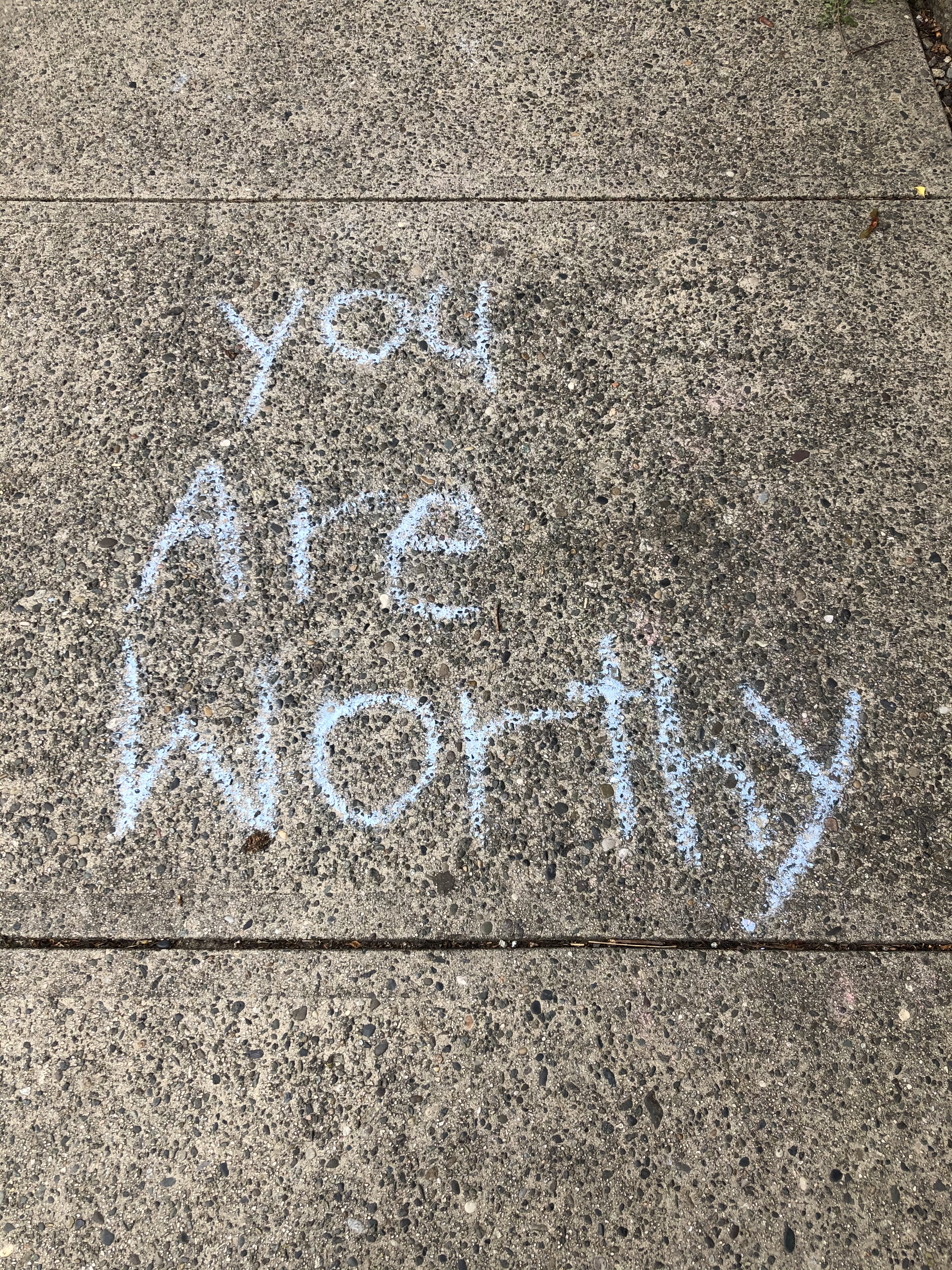
>>Getting fitter, later is a non-obligatory concept. Choosing to pursue fitness, at any age, is not a requirement for worthiness, whether you’ve worked to build your fitness in the past or not. Nor is your fitness—its extent or its value—dependent on or comparable to anyone else’s. And the ability to work on your fitness—again, at any age—is something to be grateful for.<<
10 Things I’ve Learned About Injury and the Importance of Mindset

I’ve spent a lot of time reflecting on injury and mindset. Maybe that’s what happens when you spend a long time injured, I don’t know. But while I’m certainly not an expert on the topic, I can tell you with some confidence that how you think about an injury, and yourself with that injury, affects your experience. Mindset matters.

Before we dive in, there’s another mindset piece at play in the reading of this piece, so let’s address that one first: Comparison isn’t helpful. It can be tempting to compare your injury to another person’s and dismiss their experience because they haven’t been injured for as long as you have, or it’s a different injury, obtained in a different way. Or, you may think that your experience matters less if others are more seriously injured than you, or injured more often, or if their injury seems to have a greater impact on their life. If you find yourself comparing, just stop. Stop it now. This is about you (well, actually, it’s about me), not other people. Each of us has an injury experience that is valid and specific.

Go ahead and relate to others, though. Empathize and share your experience. We can learn from each other. 

Okay, then. You’re injured. I’m sorry to hear that. I’ve been injured too, and I thought that by sharing some of what I’ve learned that it may help you.

1. Figure out if you are willing to address mindset

If you are reading this and feeling irritated with the idea of mindset—“Hey, this is a physical injury and what does how I think about it have to do with anything and it’s not like I can just ignore it and it’s really uncomfortable and I’m so frustrated and this is about my body not my mind!”—well, you may have already snorted in disgust and stopped reading.

Or you might recognize yourself in this, be tired of feeling powerless against the demands and limitations of physical injury, and want to tame the frustration.

I didn’t have a good handle on my mindset when I last got injured, despite already dealing with another long-term injury. As time went on and I wasn’t healing, I felt increasingly frustrated and sad, and I experienced some dark days. I was feeling very unlike myself. But it soon became clear to me that I needed—wanted—to do some work to reframe my experience and positively influence my daily mindset and overall outcome.

It’s okay to feel however you’re feeling about your injury. But know that you can choose to make the injury experience easier on yourself by working on your mindset. Are you willing?

2. Hold on to your power

Injury isn’t punishment; it’s not karma in action. You don’t deserve to be injured and you are not being tested.

Yes, sometimes injury is preventable, but sometimes it’s not. Sometimes it exposes a weakness; other times it is simply the effect of an overwhelming force. The injury itself doesn’t have an agenda—it’s neutral. But whether you saw it coming or you were blindsided doesn’t really matter. Your injury doesn’t reflect your worthiness.

Ascribing meaning—like the idea of punishment—to an injury gives your power away.

Why the injury happened is less important than what you are going to do about it now, and taking action requires that you believe in your ability to shape your future.

3. Look for support and participate in your recovery

Other people have a range of skills, perspectives, and good advice that they can share with you—if you let them.

I’ve started to think of this as gathering my team. I will recruit medical doctors, physiotherapists, osteopaths, massage therapists, chiropractors, naturopaths, and coaches, and I’ll keep those on the roster who prove their worth. There are practitioners in addition to these that may be useful to you. Gathering such a team is a privilege, to be sure.

I also recruit friends and family, because these are the folks I will call upon when I need to vent or need a boost or need to share a win. This is a privilege too, of a different kind.

The point, though, is that the team can’t do the work for you. You have to be a team player and contribute what your team needs to successfully provide support. In other words, your job on the team is to follow the protocol, do your rehab exercises, and share your feelings. Others can only help you if you faithfully participate.

4. Get your injury diagnosed

For me, this has been critical, twice over. Some would disagree about the importance of this, particularly if the treatment and recovery plan are the same regardless of the exact nature of the injury. I understand this thinking and I agree with it—generally, at least—in terms of moving forward to address the physical side of the injury, but it may not be what you need to address mindset.

Especially if the injury doesn’t appear to be improving.

Figuring out the nature of the injury allowed me a clearer picture of what I could expect in terms of recovery, which let me adjust my expectations, reset my goals, conserve the energy I was expending on never-ending internet searches, and, ultimately, accept where I was at.

5. Work on your resilience

I’m an optimizer: When something is important to me, I like to do everything I can to support that thing in the most effective and efficient way possible. So with an injury, I want to know what I can do (or not do) to heal faster and stronger. This includes doing work to prevent the injury from happening again.

Even if the injury didn’t directly result from a weakness, there is likely something you can do to strengthen the greater system that will benefit you the next time you are exposed to physical stress or trauma. Getting stronger—or more mobile, or flexible, or skilled—is something related to the injury that you can influence and make progress on. This increases your overall resilience, which may prevent future injury, or lessen its impact, or help you heal faster should it happen.

Doing the work to increase your resilience is about taking action, and taking action gives you something positive to focus your attention on.

6. Relax into the rehab and recovery process

For me, this was only possible once I knew what I was dealing with and had a plan. Prior to that, I couldn’t let go of the search for answers, and it was exhausting.

Knowledge and a plan allowed me to settle into the moment and find a training and recovery groove that left energy for other things. Once I did this, everything felt a little easier, more manageable, less catastrophic. I could trust the process, do the work, and mentally move on.

If you can relax into it without having to first chase down answers, please do. But whenever you manage it, you’ll feel less anxious and have more energy. And you’ll likely find joy in more things.

7. Let go of a timeline

The only thing I wanted more than to know whenI could expect to have healed from my injury was to actually have healed from my injury. The when was critical to my ability to plan for the future, and boy, do I like to plan. I’m also not very patient. So not knowing when I’d be done with my injury was excruciating, until I eventually let it go.

I’m not sure whether I’ve actually learned the skill of patience in a way that I can willingly apply it elsewhere, though I hope so. My experience has been, simply, that some injuries take a really long time to resolve, and there’s a point, after you’ve learned all you can and enacted everything you can think of to hustle healing along, where all that’s left to do is wait for the tissues to heal. 

Waiting is difficult at the best of times, when you know how long it will take. Waiting for something that will happen, at some point, eventually, is impossible to pace. The best thing to do is to stop waiting altogether. And that means letting go of a timeline.

So stop waiting and start working on other things (see #8).

8. Establish new goals unrelated to the injury

Chances are that you can work around your injury to train other parts of the body. See this as an opportunity to work on weaknesses or develop new skills and commit to their improvement.

Like I did, you may discover an affinity for a type of movement or training you didn’t know you could enjoy. It’s even possible that you may like the new focus so much that it takes precedence even after your injury resolves. But at worst, you’ll get stronger or more skilled at something, and that can only be useful.

As you work on your new goals, seeing progress over time, that long wait (see #7) for your injury to heal may diminish a bit in its hold over you, and reaching new training goals even while injured takes much of the sting away.

It’s possible, of course, that your injury is such that physical training of nearly any kind isn’t recommended right now. If that’s the case, respect it, and look for non-physical goals you can pursue.

9. Embrace (or discover) your whole identity

You are not your injury, or your activity.

It can be easy to lose perspective and think of yourself as “someone with hip pain,” for example, as if that could describe the whole you. (It can’t.) You are also not your activity; even while you were running/cycling/climbing/weightlifting, this was never the totality of your identity. You are a whole, complex person, injured or not, doing your chosen activity or not.

A relatively minor injury may sideline you for a while, but don’t let it question who you are; you can be a runner who isn’t running right now. Conversely, a relatively major injury may require that you stop running altogether. This isn’t easy to deal with, and you may feel lost without it, but I can tell you from experience that there will be something else you can get passionate about. You will find it if you look. But this new thing will not become the entirety of your identity either, because you are never only one thing.

So who are you? Who do you want to be? And how do you want to spend your time? If your injury results in you having a little more space to reflect on this, it’s only a good thing.

10. Decide how you want to think about the experience

Injury can have a meaningful effect on your life. It doesn’t have to, but it can, and the effect can be positive or negative. Do you want the sum total of the experience to be negative? Or would you rather look for the positives, the things that enrich your life, the silver linings?

This doesn’t mean that the injury itself has meaning and power (see #2). Rather, you have the power to frame the experience into something that ultimately helps you achieve your goals. It’s a choice. The earlier you can decide how you want to benefit from your experience of injury, the sooner you can focus on those gains and enjoy their benefits. I’m choosing to value the gains made from my experience with injury—in mindset, strength, patience, and new skills—over anything I may have lost.

. . .

Now, am I always successful with my own mindset work? Do I do all of these things, perfectly, all of the time? Hell, no. But I don’t think that’s the point.

This is not a quest for perfection and there’s no need to beat yourself up for taking some time to wallow or for just not feeling like doing your rehab exercises this morning. All things take practice, and mindset is no exception. The more you work on it, the better you’ll get.

The big lesson is understanding the enormous importance of mindset in the experience of injury and that we have the power to influence our own stories. I know what I want my story to be. Do you?

First published as a multi-part series from August 30 to October 2, 2019, Instagram (@shanajstone) and Facebook.